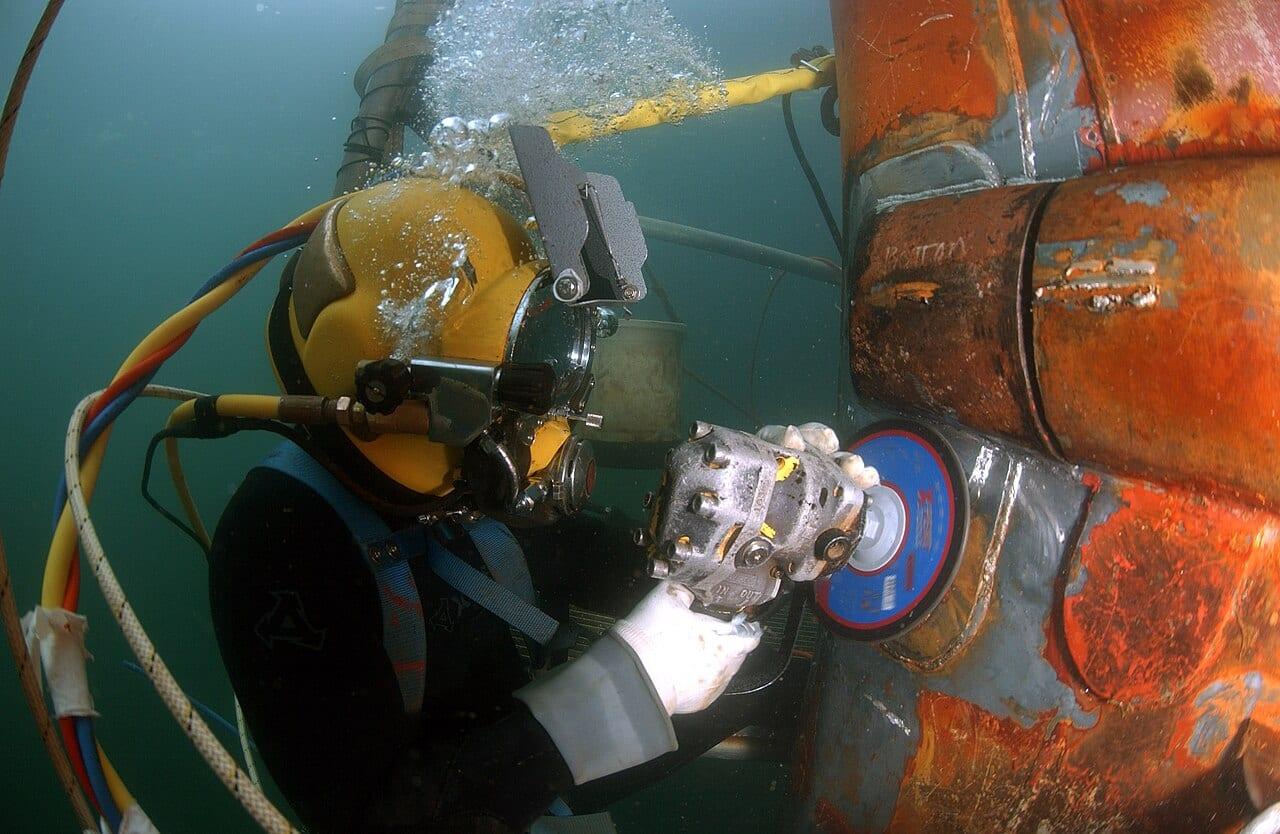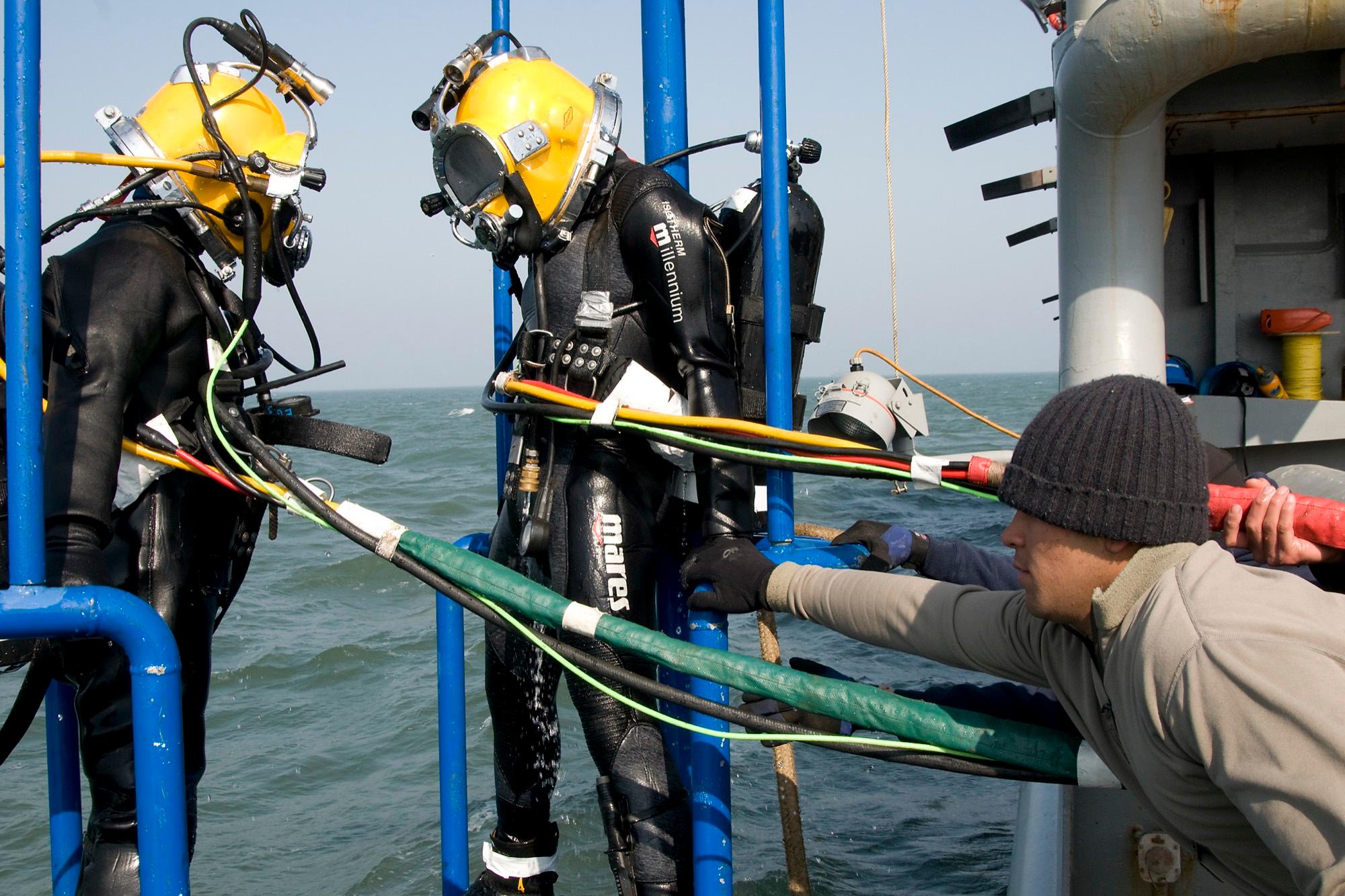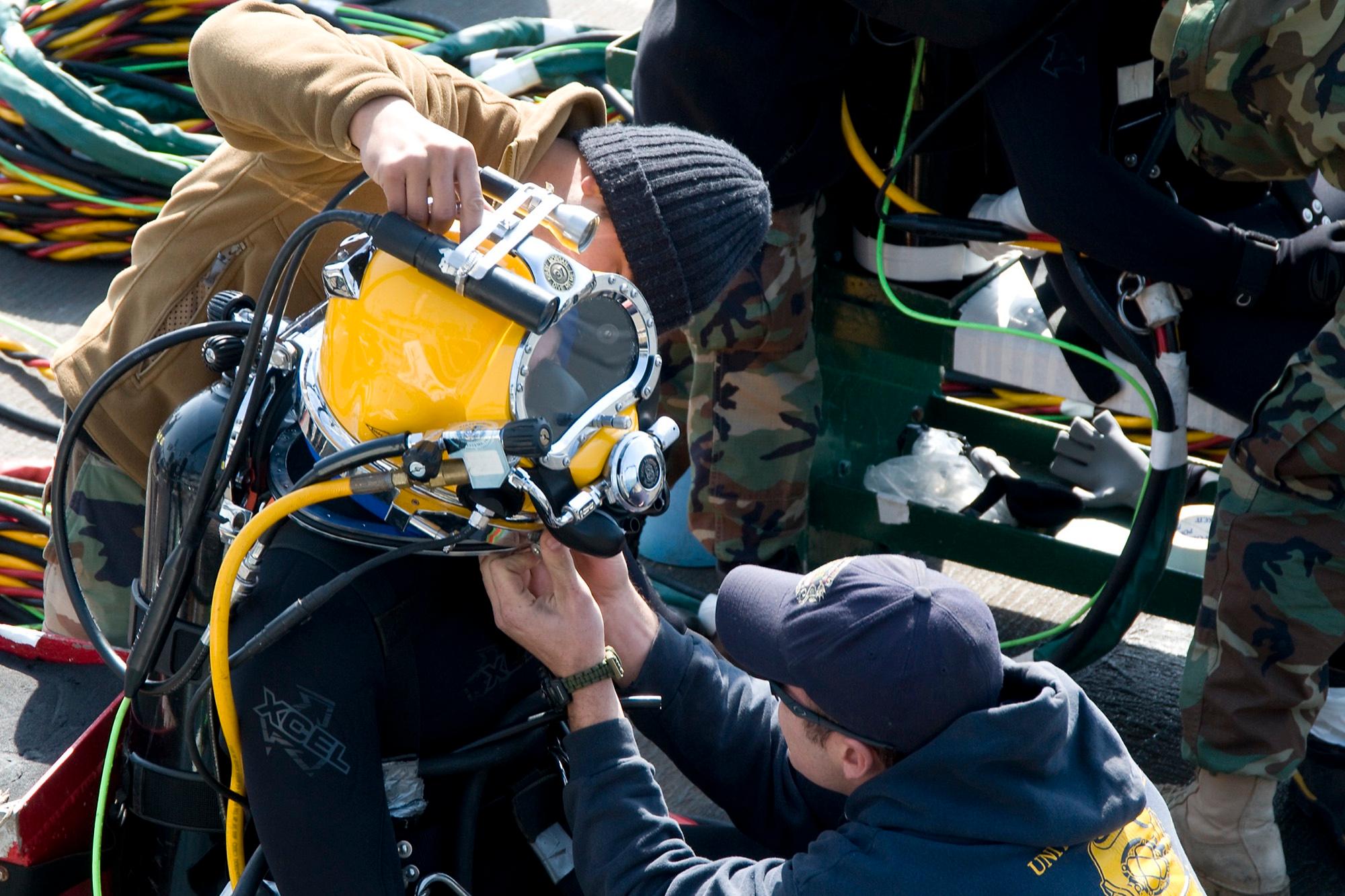
An ordinary diving operation must have at least four people: diving supervisor, diver, standby diver and tender. The team must also be large enough to handle an emergency, so four is a minimum and not always enough. If one person drops out, you must replace them or postpone the diving.
The roles on the team
- The diving supervisor leads the operation and has completed a diving supervisor course. The role requires diving certificate class A or B, and a refresher course every five years.
- The diver carries out the work and must have a diving certificate that covers the work, and a valid medical certificate.
- The standby diver is a permanent part of the team and stands ready on the surface.
- The tender is responsible for the lifeline. A diving certificate is not required, but the checklist from Arbeidstilsynet (the Norwegian Labour Inspection Authority) asks for good knowledge of diving, equal to several weeks of training.
Arbeidstilsynet's checklist for buyers names class B for the diver and the standby diver. Class B is required in or by fish cages, on vessel hulls and closer than 10 metres to quays, pipelines and structures, among other places.
Can the diving supervisor also be the standby diver?
No. Standby diver and diving supervisor are two separate roles, both during the operation and in an accident.
How quickly must the standby diver be ready?
The standby diver must be on the surface, fully dressed with the mask off, and ready to enter the water as soon as possible and within one minute at the latest.
Several businesses on the same operation
If people from several employers take part, you must appoint a principal enterprise. It is responsible for making sure all requirements for the diving operation are met. Settle this before the start, especially when you put a team together in a hurry.
Night work
The regulations have their own limits for working hours at night. Divers who work more than three hours at night should, as a starting point, not work longer than eight hours in 24 hours. Arbeidstilsynet also mentions the need for diving at all hours in aquaculture, so check the current rules before you plan night shifts.
When someone drops out
This is our practical advice, not requirements in the regulations:
- Stop the diving until the team is complete. Do not spread the roles over fewer people.
- Keep a list of divers and diving supervisors you can call, with the expiry dates of their papers.
- Check the diving certificate and medical certificate before the person travels, not when they are standing on the quay.
- Choose the right arrangement from the start. In case of illness, covering for an absent employee can be a lawful ground, see how to bring in divers legally.
- Go through the work instructions and emergency procedures with the new person, and practise the tasks in an accident.
Frequently asked questions
How many people must there be on a diving team?
At least four: diving supervisor, diver, standby diver and tender. The team must also be large enough for an emergency.
Must the tender have a diving certificate?
No, it is not a requirement that the tender has a valid diving certificate. Arbeidstilsynet's checklist asks for good knowledge of diving, equal to several weeks of training.
Are there exceptions to the four-person requirement?
Yes, separate rules apply to swimming pools and similar that are no deeper than six metres.
Sources (in Norwegian)
- Arbeidstilsynet: Kjøp av dykketjenester
- Arbeidstilsynet: Regelverket for dykking
- Arbeidstilsynet: Dykkerbevis
- Arbeidstilsynet: Helseerklæring for arbeidsdykking
This article is general guidance, not legal advice. The rules and rates can change, so check the current requirements with Arbeidstilsynet (the Norwegian Labour Inspection Authority), Nav, Skatteetaten (the Norwegian Tax Administration) and on Lovdata, where Norwegian law is published.