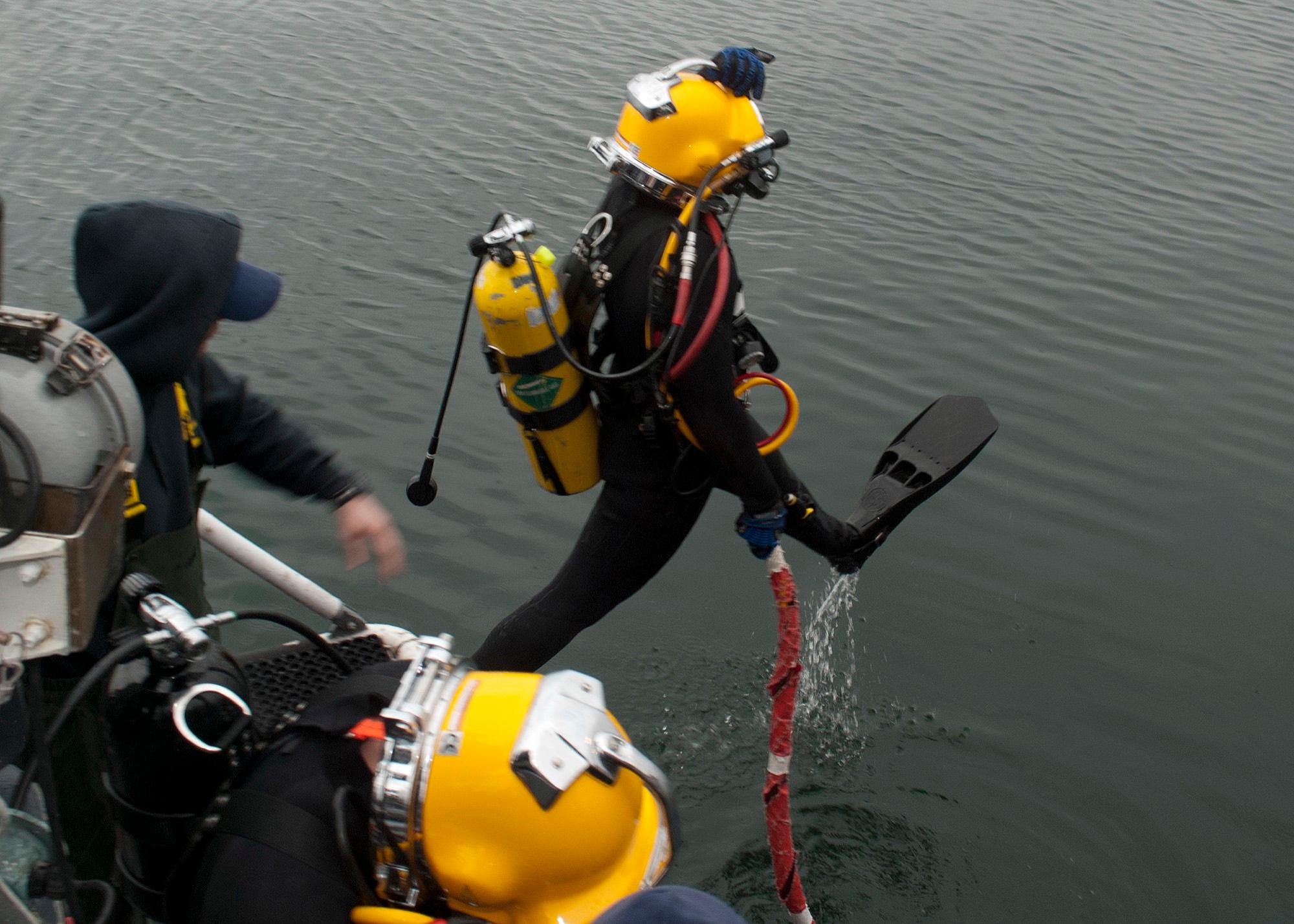
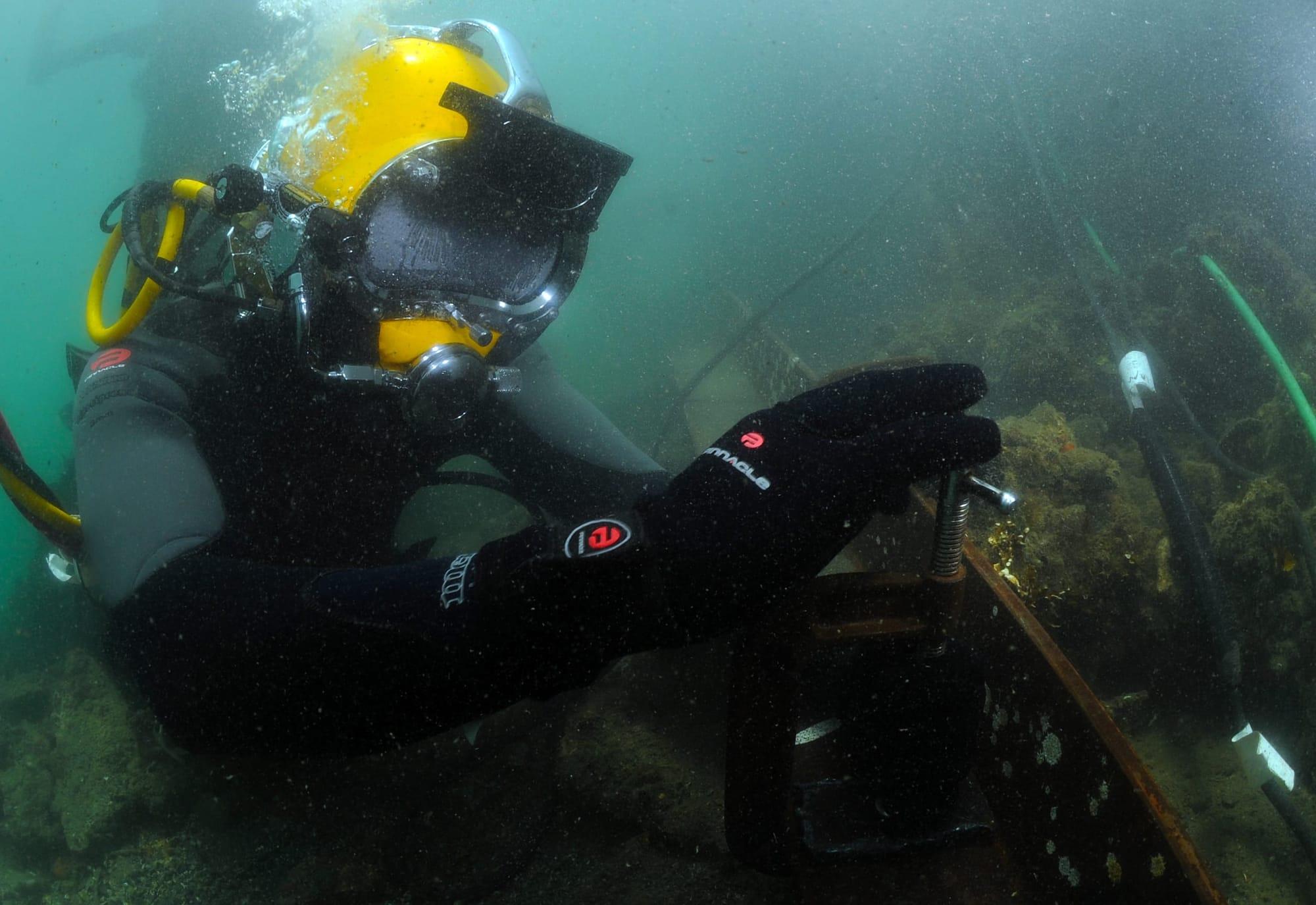
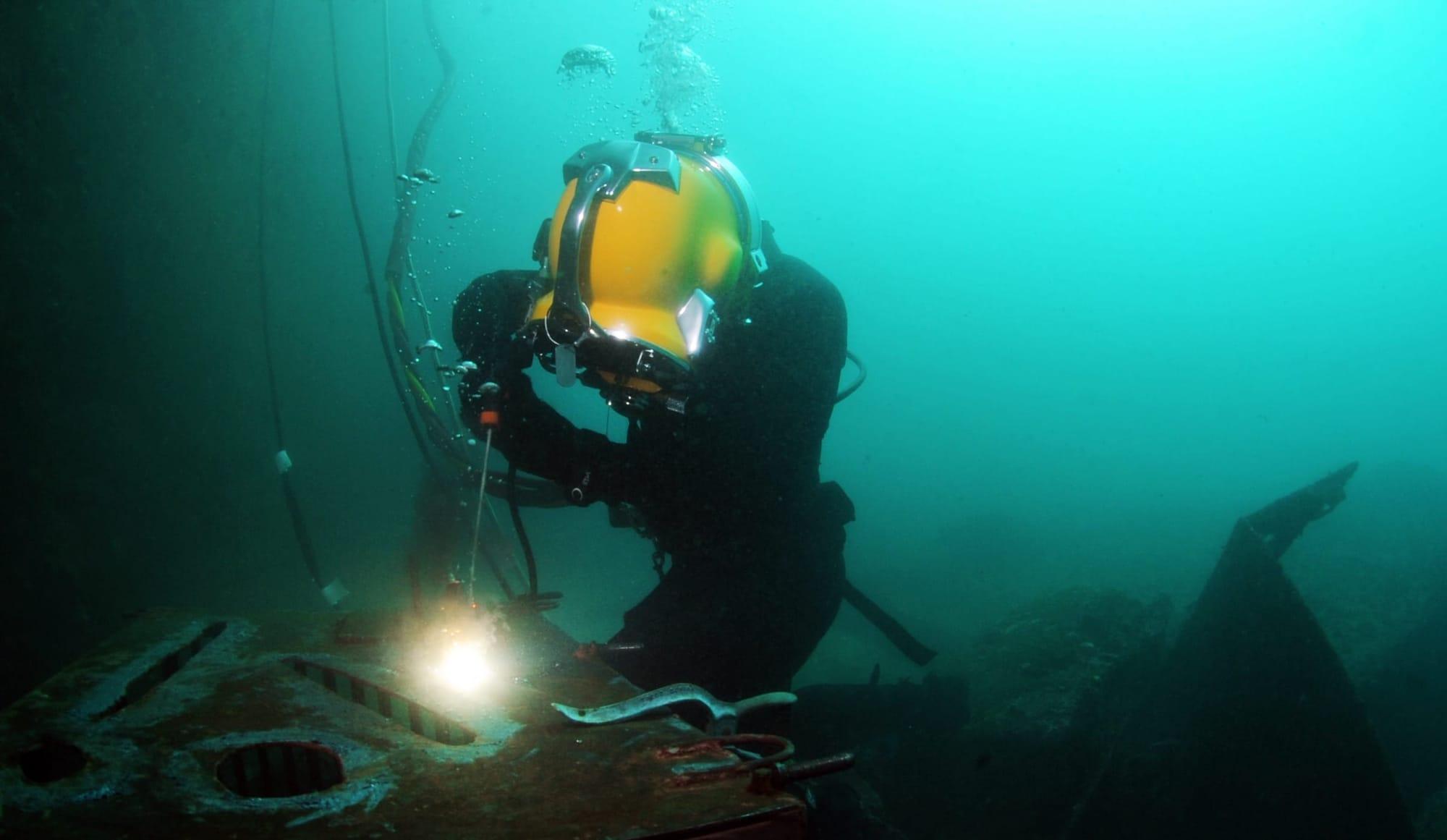
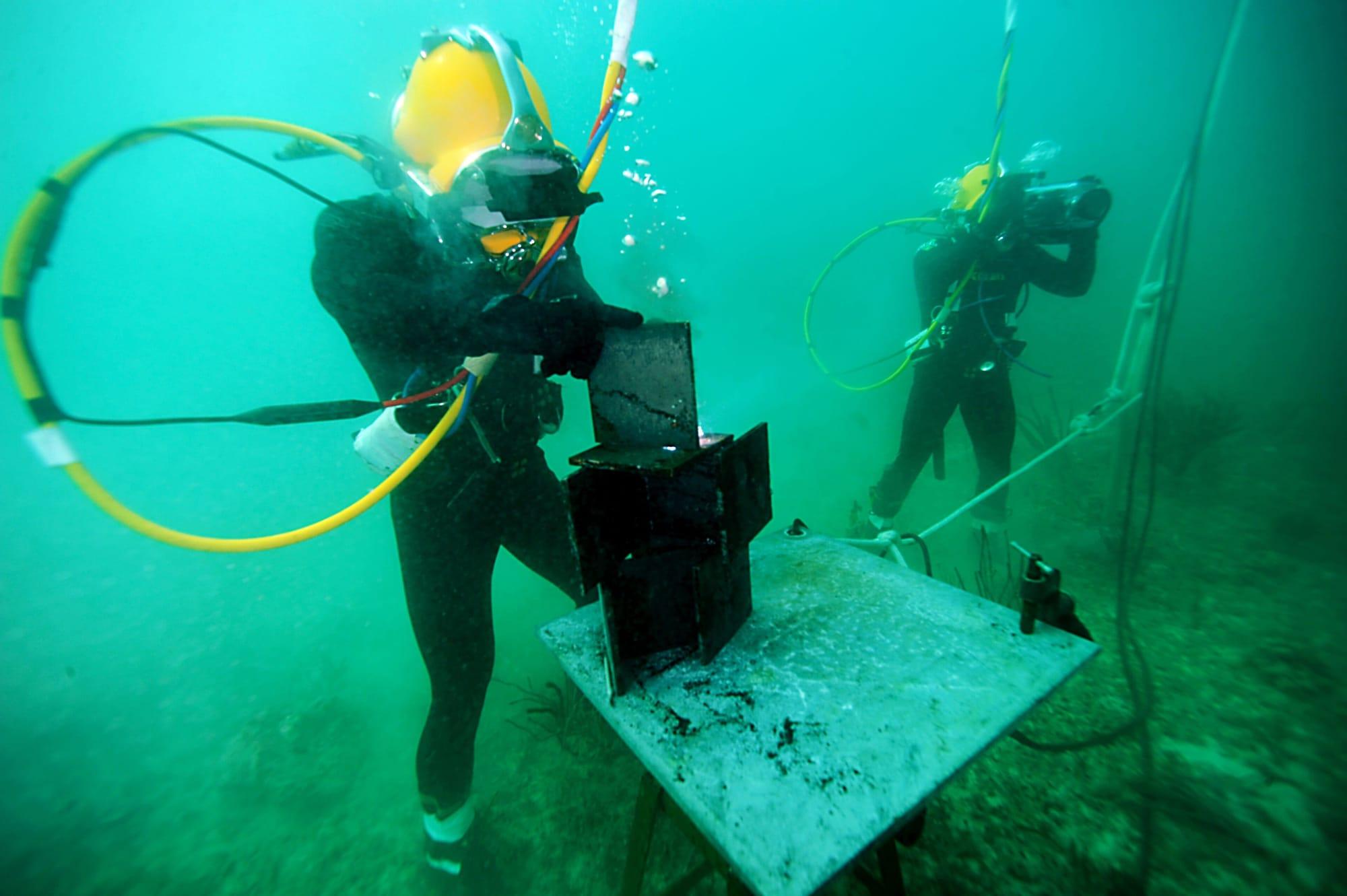
To work as a commercial diver in Norway you need a diving certificate and a valid medical certificate. Most take class B, which is mainly issued through the commercial diving schools. You can train at Norsk Yrkesdykkerskole at Nesodden, for example, or at the one-year vocational college programme at Høgskulen på Vestlandet (Western Norway University of Applied Sciences) in Bergen.
What is required to work as a commercial diver?
- A diving certificate that covers the work. Class A covers simple and light work down to 30 metres. Class B covers heavier work down to 50 metres.
- Training of at least 9 weeks for class B, and at least 7 weeks for class A.
- A valid medical certificate from an approved diving doctor. It lasts for one year.
Class B is required in or by fish cages, on vessel hulls and closer than 10 metres to quays and structures, among other places. See the overview of diving certificates and papers.
Where can I train?
Norsk Yrkesdykkerskole at Nesodden offers courses. Utdanning.no gives the price as NOK 72,000 from November 2026.
Høgskulen på Vestlandet in Bergen has a one-year vocational college programme in commercial diving worth 60 credits, with 20 places and an application deadline of 15 April. The programme is approved by Nokut (the Norwegian quality assurance agency for education) and Lånekassen (the Norwegian State Educational Loan Fund).
Ask the school which certificates you will hold when you finish, and check dates and prices with the schools before you apply.
What are the entry requirements?
At Norsk Yrkesdykkerskole you must:
- be at least 18
- have completed 9 years of compulsory school
- be able to swim 400 metres
- be able to hold your breath for 45 seconds under water
- have a medical certificate for commercial divers
You do not need diving experience. The vocational college in Bergen requires general university admission certification, a trade or journeyman's certificate, or relevant prior learning and experience, and the programme also has physical requirements.
Do I need a trade certificate?
No, it is not a requirement at Norsk Yrkesdykkerskole. Utdanning.no still writes that vocational training is an advantage, for example in building and construction. Work under water is often skilled manual work, so welding, concrete and construction experience come in handy.
What is the job like?
Commercial diving is divided into inshore diving and diving at onshore facilities or in the North Sea, and it is common to specialise. Diving deeper than 50 metres must only be done as saturation diving.
Inshore you work on quays, bridges, pipelines, fish farms and ships, among other things. Utdanning.no states that the average diving time is 100 hours a year, so much of the work happens above water. In building and construction, the number of days away can reach 250 a year.
How to get started
This is our advice:
- Keep your medical certificate valid from day one, also while you are looking for work.
- Be open to the role of tender. You get to know the team and the procedures.
- Take courses in what clients often ask for, such as first aid, safety courses and a driving licence.
- Keep an eye on open diving jobs and assignments.
Wondering what you can earn? Read what a commercial diver earns.
Frequently asked questions
How long does it take to become a commercial diver?
Training for diving certificate class B must last at least 9 weeks. The vocational college programme at Høgskulen på Vestlandet lasts one year.
Must I have dived before?
No. Norsk Yrkesdykkerskole does not require diving experience, but you must be able to swim 400 metres and have a medical certificate.
Can recreational divers work as commercial divers?
No, not with a recreational diving certificate. Occupational diving cannot be carried out by recreational divers.
Sources (in Norwegian)
- Arbeidstilsynet: Dykkerbevis
- Arbeidstilsynet: Helseerklæring for arbeidsdykking
- Arbeidstilsynet: Regelverket for dykking
- Arbeidstilsynet: Kjøp av dykketjenester
- Utdanning.no: Dykker
- Utdanning.no: Norsk Yrkesdykkerskole
- Utdanning.no: Yrkesdykking ved Høgskulen på Vestlandet
- Utdanning.no: Dykking
This article is general guidance, not legal advice. The rules and rates can change, so check the current requirements with Arbeidstilsynet (the Norwegian Labour Inspection Authority), Nav, Skatteetaten (the Norwegian Tax Administration) and on Lovdata, where Norwegian law is published.